
Technology / 01
PRESSURE IN.
CONTROLLED AIR RESPONSE OUT.
The platform is designed around a simple sequence: contain air, shape its path, and use the natural loading cycle of a step to make that air useful.
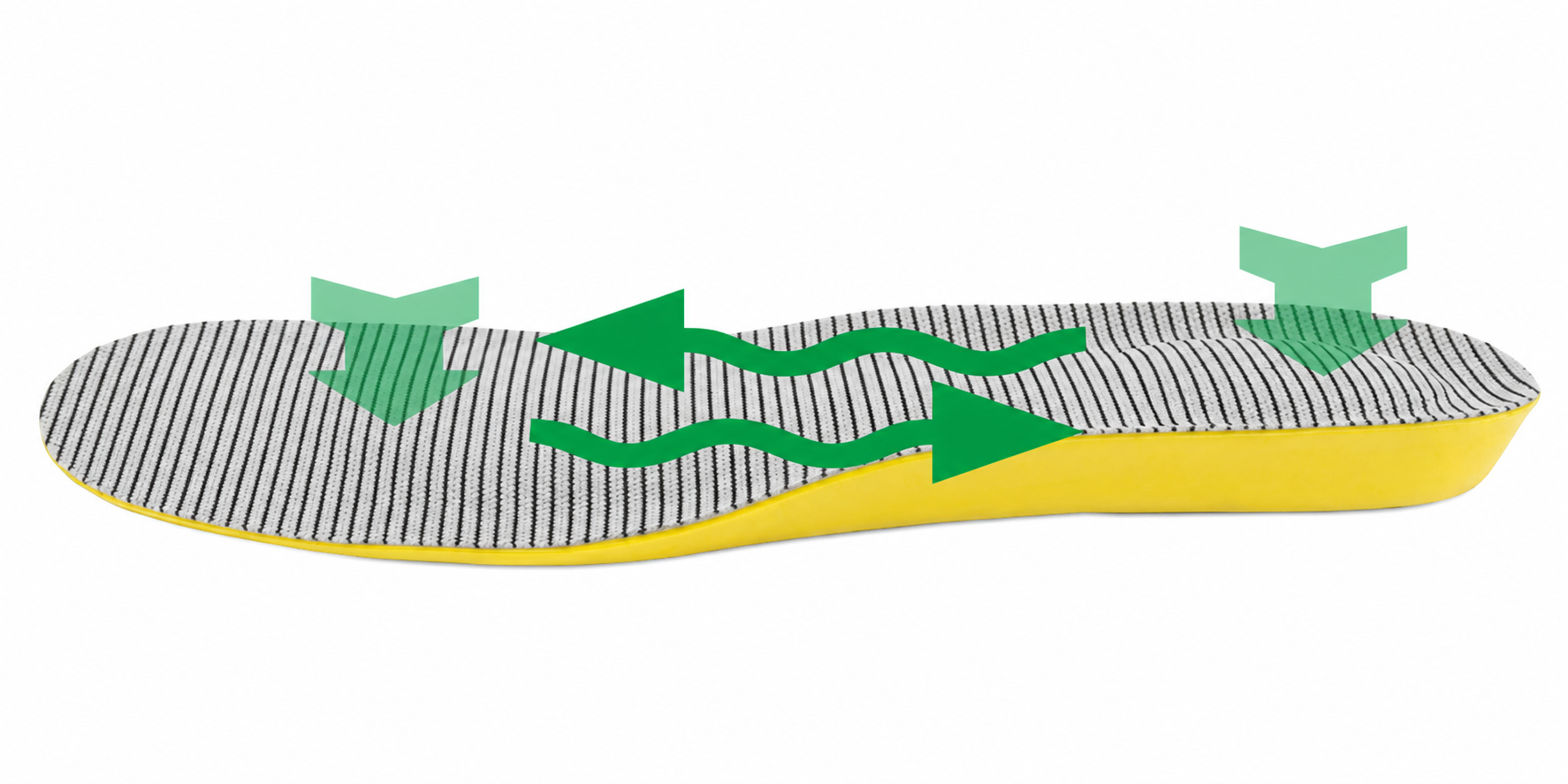
Mechanism one
Pascal’s Principle
Pressure applied to a confined fluid is transmitted through that fluid. In SAI, the fluid is air inside a sealed, shaped chamber.
The chamber is intended to move a concentrated impact through a wider air volume.
Air compression and the surrounding resilient structure work together during heel strike.
When load releases, the chamber returns toward its original form for the next step.
Mechanism two
Bellows action
BTI converts the compression-and-release cycle into a miniature pump. The heel section draws and pushes air through a defined path toward the forefoot.
No battery or electronics—the user’s gait supplies the energy.
The air pathway is designed to move fresh air toward the toe area.
Especially relevant to enclosed work, military, outdoor, and safety footwear.
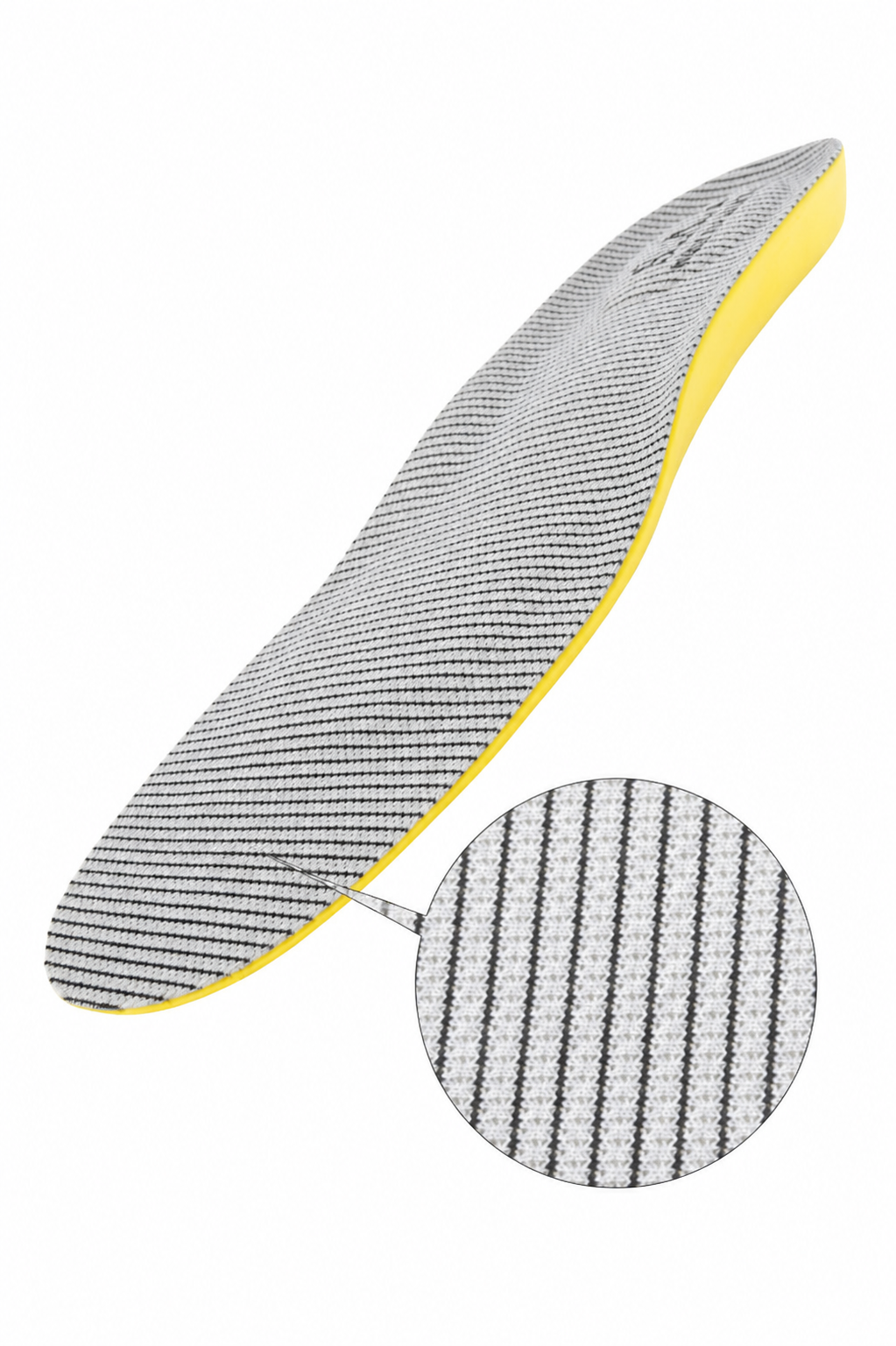
Mechanism three
Graphene-containing top fabric
The top fabric is the direct interface between the foot and the pneumatic structure. Its graphene-containing textile construction adds a distinctive technical layer designed for comfort, freshness, and durable contact.
The textile is selected to support a more comfortable foot-contact surface during extended wear.
The graphene-containing construction supports a fresher in-shoe material story without overstating clinical performance.
A resilient top layer provides a clean, refined surface over the responsive air structure.
Material composition, antimicrobial performance, and market-specific claims should be confirmed by supplier documentation and standardized testing before publication on packaging or in clinical channels.
Credibility through evidence
Designed for a validation pathway.
The mechanism is visible, explainable, and testable. Recommended proof includes pressure mapping, airflow measurement, compression-set testing, dynamic fatigue testing, and controlled wearer studies.
Request a technical discussion